After Convict Lake
Convict Lake was our first stop on this Eastern Sierra road trip. It gave me one of the most beautiful lakes I had ever seen, a completely unnecessary swim in cold water, and one of my first attempts to record videos in public.
After that, we kept driving through the Mammoth Lakes area without much of an agenda. We explored, pulled over when something looked beautiful, and eventually found a place to camp.
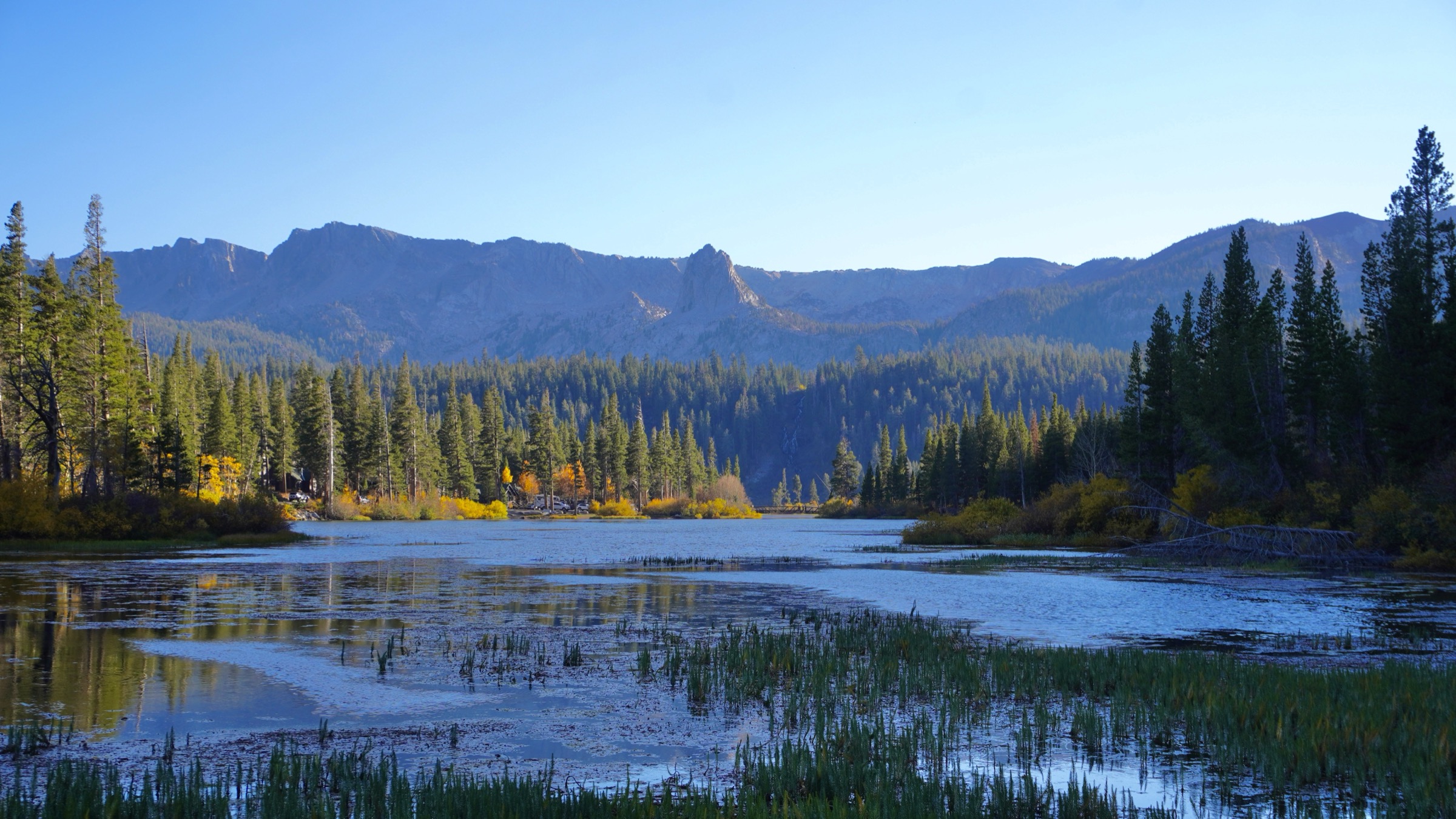
One of our stops was what I believe was Lake Mary. I do not want to claim the location with more certainty than my memory allows, but I remember the water, the forest, and the mountains catching the late-day light.
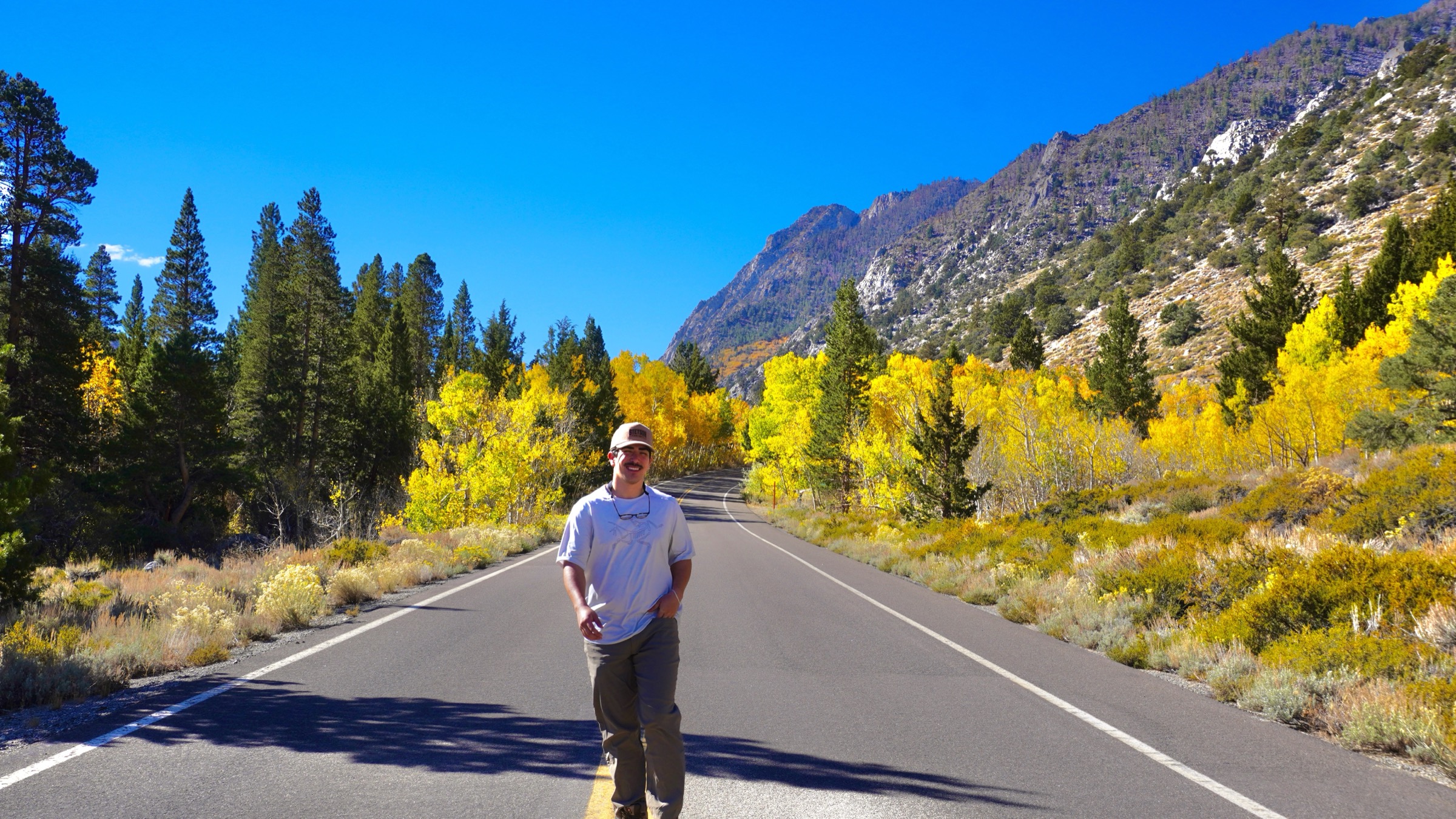
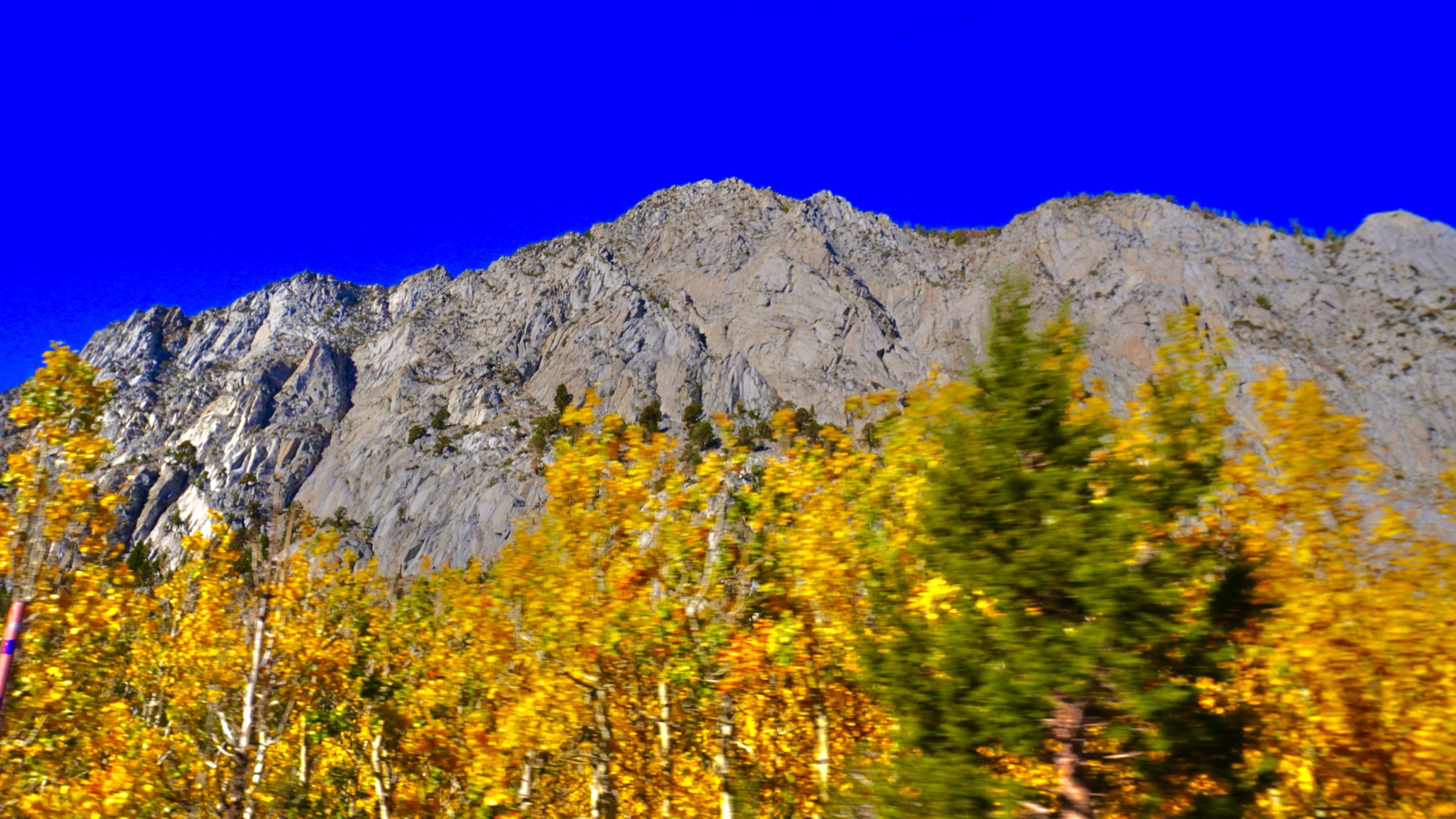
Other photographs came from places whose names I never learned. One portrait happened because we saw an incredible stretch of road framed by bright fall color and decided we had to pull over. Another photograph was taken through the open window of the truck while we were still moving.
There was no elaborate content plan behind those moments. The place looked beautiful, so we stopped—or rolled down the window—and tried to keep a piece of it.
The place I had taken for granted
What surprised me most was not any single lake, mountain, or stand of trees. It was realizing how badly I had underestimated the Eastern Sierra as a whole.
My grandfather took me into the Sierras when I was young. He and my dad would regularly talk about going back to fish. We went occasionally, but never as often as they wanted. I heard the enthusiasm in their voices without fully understanding it.
At the time, the Sierras were simply somewhere my family went. Familiar places can become background scenery before we ever learn to appreciate them.
Since then, I have traveled to places known around the world for their natural beauty. I have seen Alpine lakes in Switzerland. I have visited Yellowstone and Grand Teton National Park. Those experiences gave me a broader frame of reference, but they also made me look differently at what had been near me all along.
Driving through Mammoth during the fall, I finally understood why my grandfather and dad always wanted to return. The granite mountains, pine forests, clear water, and bright yellow trees felt comparable in beauty to landscapes people cross the country to see.
I think the Eastern Sierra is fundamentally underrated. If this exact landscape were somewhere else, people might talk about it like a national park. It is not less beautiful because I can reach it from Los Angeles by driving north on Highway 395. If anything, its closeness makes my failure to appreciate it sooner more obvious.
I had traveled a long way to see extraordinary places. One of them had been sitting in my own state the entire time.
My first tent
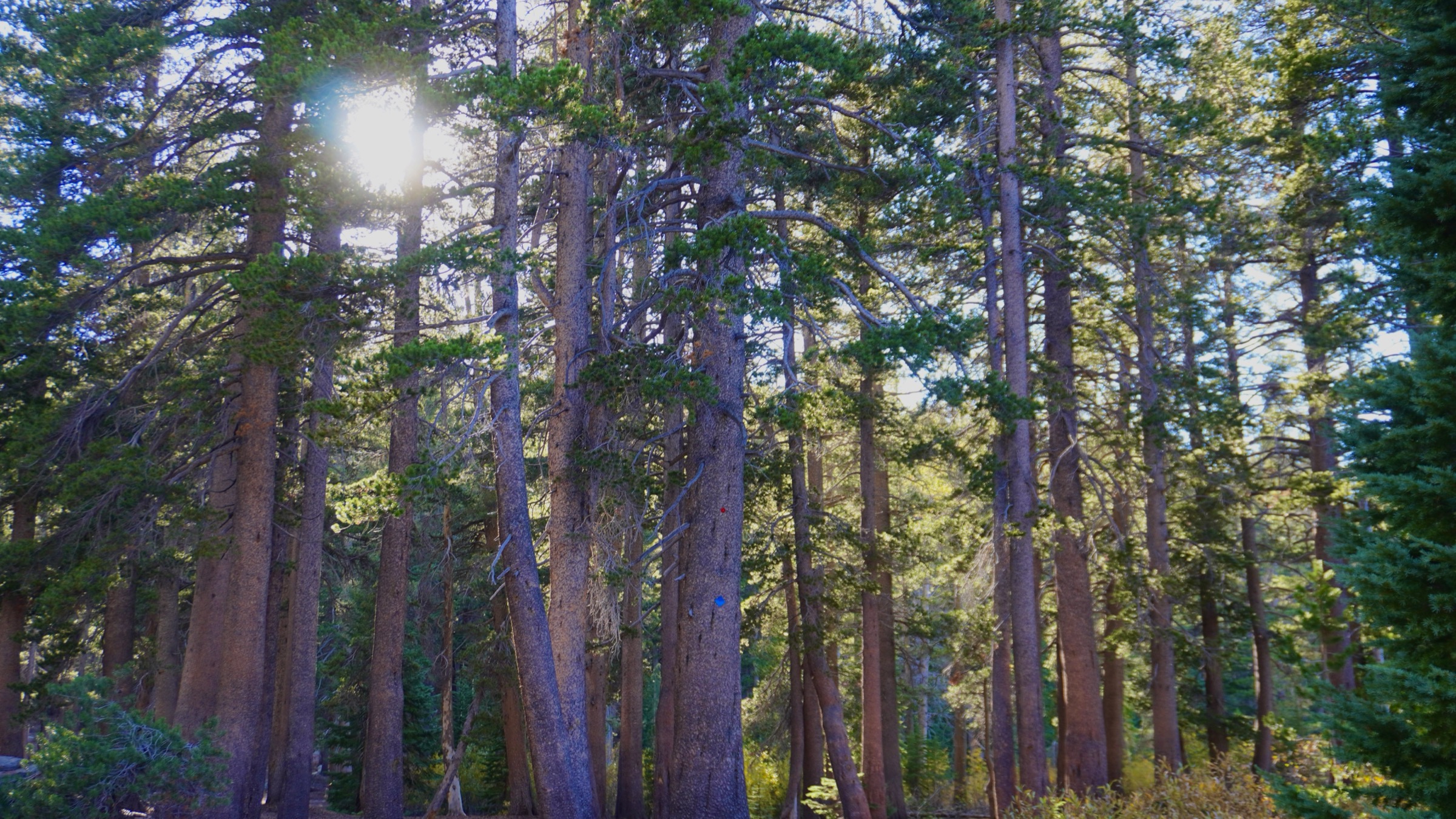
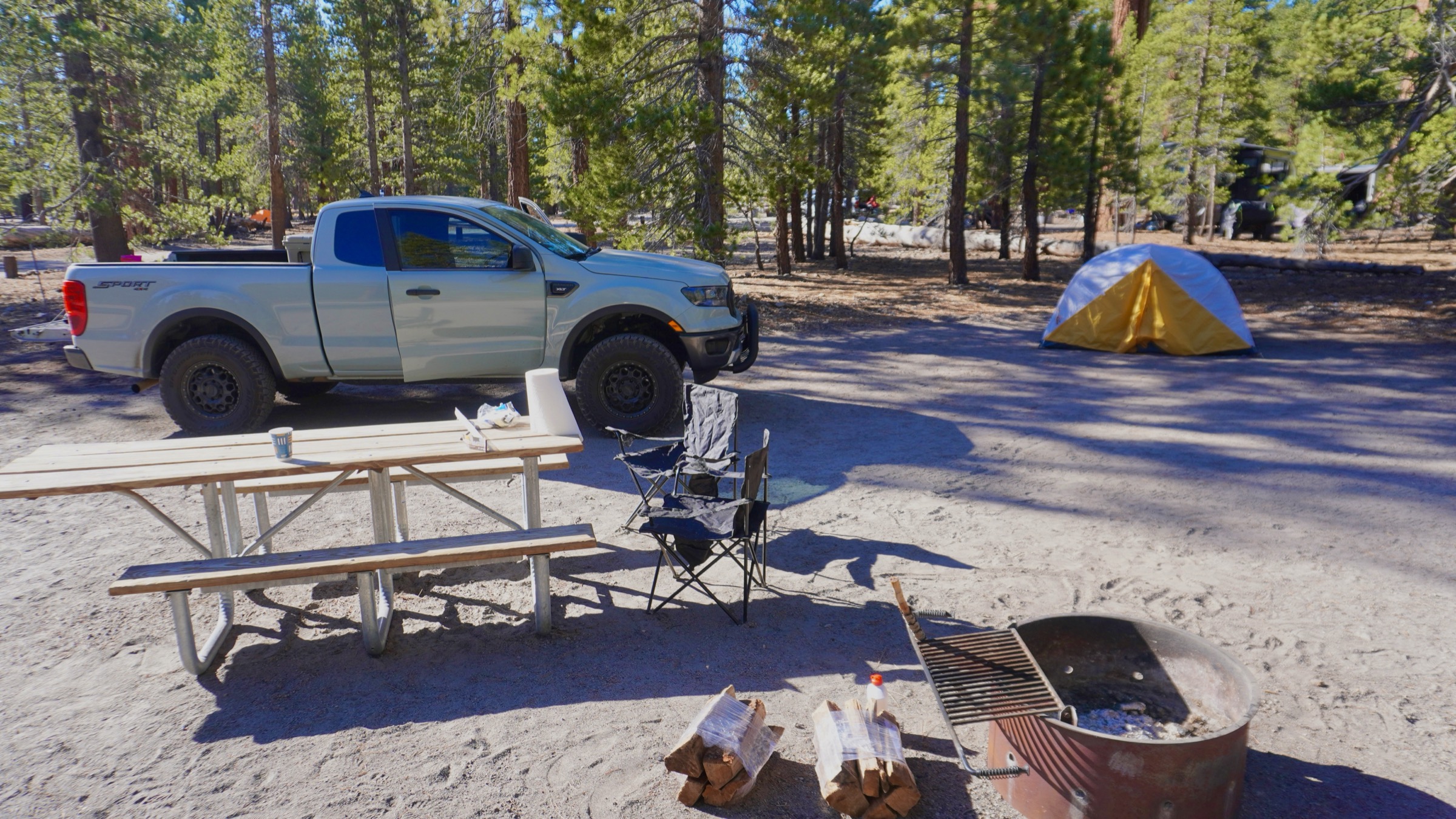
By the end of the afternoon, we needed to establish camp. I believe we stayed at Glass Creek. We chose it for practical reasons: the campsite was free, it had bathrooms, and we found a fire ring we could use. That was more than enough.
Most of my childhood camping experience involved a family trailer and, briefly, my parents’ motorhome. As an adult, I tended to go in the opposite direction. I would sleep in the bed of my truck, use an air mattress, or cowboy camp without creating much private space at all.
Part of that is simplicity. Part of it is financial. In my personal life, I do not like debt. My preferred formula is simple: build a strong income, keep fixed expenses low, avoid consumer debt, and preserve as much freedom as possible.
That does not mean I never admire a larger truck, a trailer, or a comfortable motorhome. Those setups make camping easier. I can appreciate them and still decide that, for me right now, the freedom of not financing them matters more.
This trip represented a modest upgrade. I bought a tent and a sleeping pad—equipment I could use repeatedly for years rather than something designed for one weekend.
It was also my first time setting up a tent myself. I was not very good at it. Fortunately, my friend knew what to do, and the process was much easier with help. I spend a lot of my working life trying to become highly competent, so being new at something ordinary was probably good for me.
Eventually, the tent stood, the truck was parked, and we had a place to sleep.
Fun is not priced by the dollar
Nothing about that first evening was extravagant. I do not remember a proper dinner. We may have eaten sandwiches from Vons after a day of drive-through food and snacks. The drinks were probably the usual collection I bring everywhere: water, Coke Zero, and Celsius.
Then we used the fire ring, built a fire, and called it a night after a long day on the road.
I like trips that work this way. I do not believe the amount of money spent on an experience determines how meaningful it can be. Sometimes expensive things are worth paying for. But cost and enjoyment are not the same measurement.
A free campsite, grocery-store food, a basic tent, and a fire can create a great memory. That is not a rule for everyone. It is simply one of the ways I understand freedom.
Freedom, to me, is keeping enough financial and mental margin to say yes to a road trip and be present when I get there.
Work still followed me there
I would like to say that the moment we reached camp, I stopped thinking about work entirely. That would not be true.
We had Starlink at camp, and I had my laptop with me, so I was not only thinking about work. I still did some of it. I used ChatGPT to create and edit scripts, checked in on the acquisition, and kept a few other things moving without turning the entire trip into another workday.
Starlink is one of the coolest technologies I have used. It let us keep some of the creature comforts we have grown accustomed to while sitting in the middle of the Eastern Sierra. The campsite was still a campsite; we simply did not have to pretend that enjoying nature required disappearing from the modern world.
The acquisition and my other projects would have crossed my mind either way. Those thoughts were not there only because I was worried or unable to relax. They followed me because I genuinely like much of what I do.
AI is interesting to me. Building companies is interesting to me. Teaching people, solving problems, and creating something that did not exist before are interesting to me. I have written more about the work I am building inside my family’s service business.
When I step away, part of me misses it. I used to think rest required becoming a different person. I assumed a successful trip meant shutting off every ambitious thought and acting as though the work no longer mattered.
I no longer think that is necessary. The work can matter, and I can still build a fire. I can care about an acquisition and still stop for yellow trees. I can be excited about AI and still laugh while trying to assemble my first tent.
A full life does not require me to divide myself into separate people. It requires knowing when each part deserves my attention.
What my younger self would have missed
The younger, hyper-optimized version of me probably would have measured that evening against everything else I could have accomplished. I could have worked more. I could have read something useful. I could have improved a system or moved a project forward.
That logic is not completely wrong. Time matters, and I still optimize many parts of my life—especially my finances. But not every worthwhile result appears on a spreadsheet.
An open road can become a story. A roadside photograph can preserve a version of a place that will never look exactly the same again. A friend who helps me set up a tent can become part of a memory I carry for years.
Those experiences matter because relationships are built from more than productivity. People connect through stories, shared moments, mistakes, jokes, places, and the ordinary details that become meaningful after enough time has passed.
The first day of the trip did not need a dramatic ending. We drove a long way. We swam at Convict Lake. We explored Mammoth. We watched the fall colors pass outside the truck. We set up camp, built a fire, and went to sleep.
That was the whole point.
I am still ambitious. I still love my work. I still want to build difficult things and become better at what I do.
I am also learning that freedom is not merely having the ability to work whenever I want. It is having the ability to stop for the view—and understanding that doing so is not time wasted.
The next morning, we followed the Little Lakes Valley trail toward Long Lake and returned to Marsh Lake for sunset.
What to remember
- The Eastern Sierra was close enough to take for granted and beautiful enough to change my perspective.
- Freedom can mean choosing simple equipment and low fixed obligations over financed comfort.
- Loving the work and making room for life do not have to be contradictory.
STAY IN TOUCH
Follow the record as it is built.
Tim shares plain-English lessons from building companies, serving communities, and improving institutions—work that is developing the judgment and operating range for broader responsibility over time.